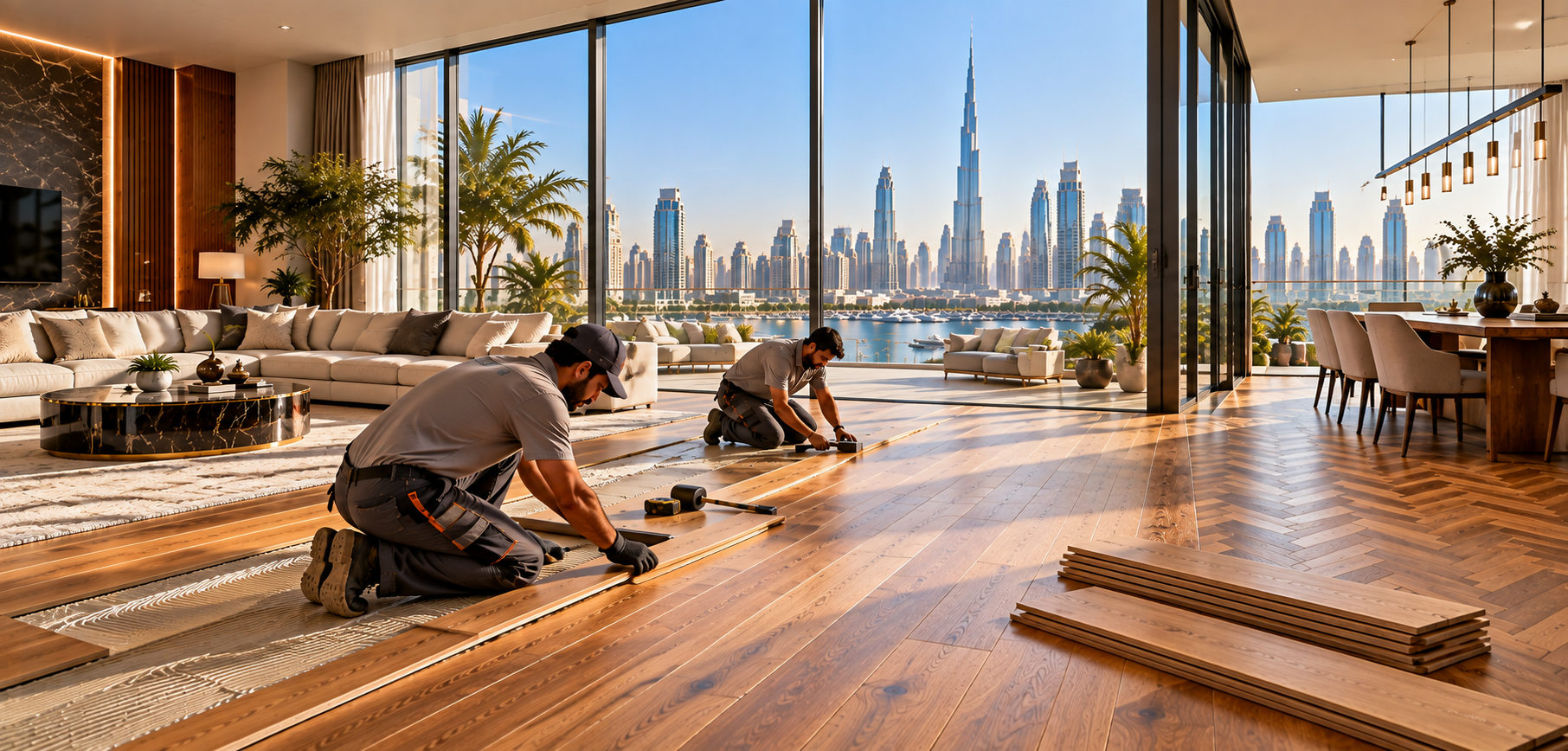
What if the foundation of your room was not merely a functional covering, but a silent curator of the atmosphere you wish to evoke? It's natural to feel a sense of hesitation when faced with the choice of a permanent floor. You likely worry that a misplaced seam might fracture a serene vista, or that the rigors of a high-traffic hallway might eventually tarnish a significant investment. Choosing between carpet tiles vs wall to wall carpet is a decision that requires the eye of a collector and the foresight of an architect.
We invite you to discover the delicate balance between these two distinct artisanal paths, moving beyond simple utility to find the format that best serves your unique architectural narrative. This guide provides the clarity you seek, offering a refined framework for selecting a foundation that balances aesthetic purity with practical longevity. You'll gain a sophisticated understanding of how seamless broadloom creates an uninterrupted horizon of softness, while modular tiles offer a rhythmic, adaptable precision that guards against the anxieties of maintenance and wear. Together, we'll ensure your selection reflects a commitment to quality that transcends fleeting trends and anchors your space in lasting beauty.
Key Takeaways
- Distinguish between the immersive, seamless expanse of broadloom and the modular, rhythmic precision of tiles to align with your project's architectural intent.
- In the debate of carpet tiles vs wall to wall carpet, you will learn to weigh the fluid continuity of a wide-loom roll against the structured, rhythmic versatility of modular squares.
- Discover why broadloom remains the master of underfoot luxury through specialized underlays, while modular formats offer the elegance of surgical maintenance for high-traffic environments.
- Master a framework for selecting your foundation based on the "soul" of the room, whether it requires a silent witness for contemplation or a durable stage for collaboration.
Table of Contents
Defining the Canvas: The Fundamental Nature of Carpet Tiles and Wall to Wall Carpets
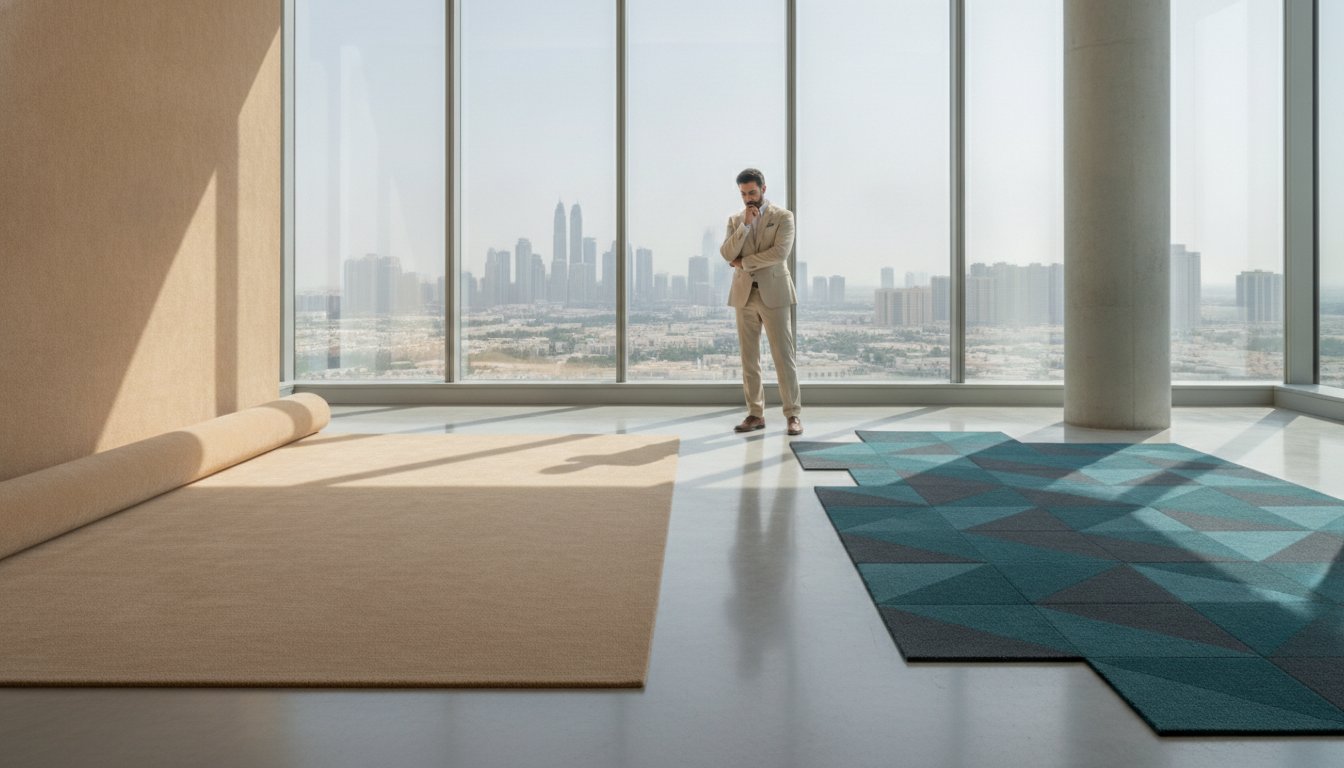
To select a flooring foundation is to choose the very atmosphere that will anchor your architectural narrative. When we consider the choice between carpet tiles vs wall to wall carpet, we aren't simply comparing materials; we're choosing between two distinct philosophies of space. Zia and Sagor Carpets Trading LLC acts as the curator in this journey, helping you navigate these paths with the wisdom of a seasoned connoisseur. The Carpet has long served as the emotional core of a room, yet the format it takes dictates whether the eye experiences an unbroken horizon or a rhythmic, geometric dance. Broadloom is woven on expansive looms to create a singular, immersive textile that flows from one wall to the next without interruption. Conversely, carpet tiles offer a modular precision, utilizing squares or planks to create intricate patterns that allow for both creative expression and the practical elegance of surgical maintenance. Both formats serve as the foundational narrative for national residential villas and prestigious commercial environments alike.
The Heritage of Broadloom Carpetry
The lineage of broadloom carpetry stretches back through centuries of specialized creation, finding its roots in the meticulous traditions of hand-tufted artistry. This format embodies a sense of permanence and grandeur that is difficult to replicate, acting as a seamless canvas that allows the furniture and architecture to speak with a unified voice. In the most intimate, high-luxury environments, the absence of seams is more than a visual preference; it's a testament to the slow, deliberate nature of high-end design. Broadloom remains the preferred choice for those who seek a sanctuary of quietude, where the floor is a silent partner in a larger story of heritage and exclusivity. It transforms a room from a mere enclosure into a cohesive, immersive experience that feels anchored in history.
The Modernity of Modular Design
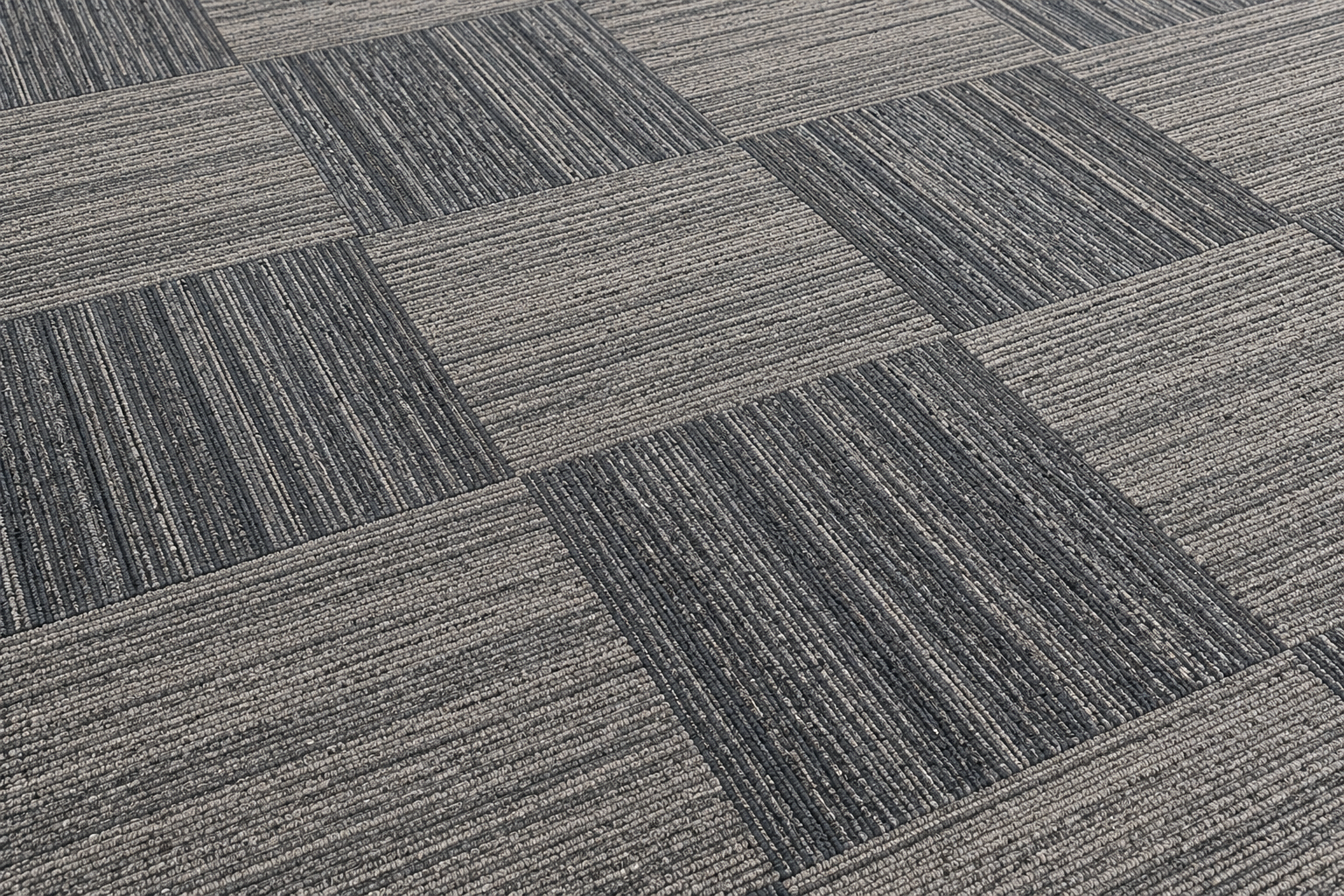
While broadloom honors the past, carpet tiles represent a contemporary revolution in modular design, offering a compelling alternative in the discussion of carpet tiles vs wall to wall carpet by treating the floor as a dynamic work of art. These individual elements are engineered with a sophistication that now rivals the plushness of traditional rolls, yet they offer a freedom of expression that is entirely modern. Through the use of staggered, monolithic, or herringbone layouts, a designer can define zones within a space without the need for physical barriers. This modularity isn't merely functional. It's a calculated artistry that allows for the effortless replacement of a single tile, ensuring that the visual integrity of the room remains unblemished by the passage of time or the demands of high-traffic environments, positioning the floor as an evolving masterpiece.
The Seamless Horizon: Appreciating the Grandeur of Wall to Wall Carpets
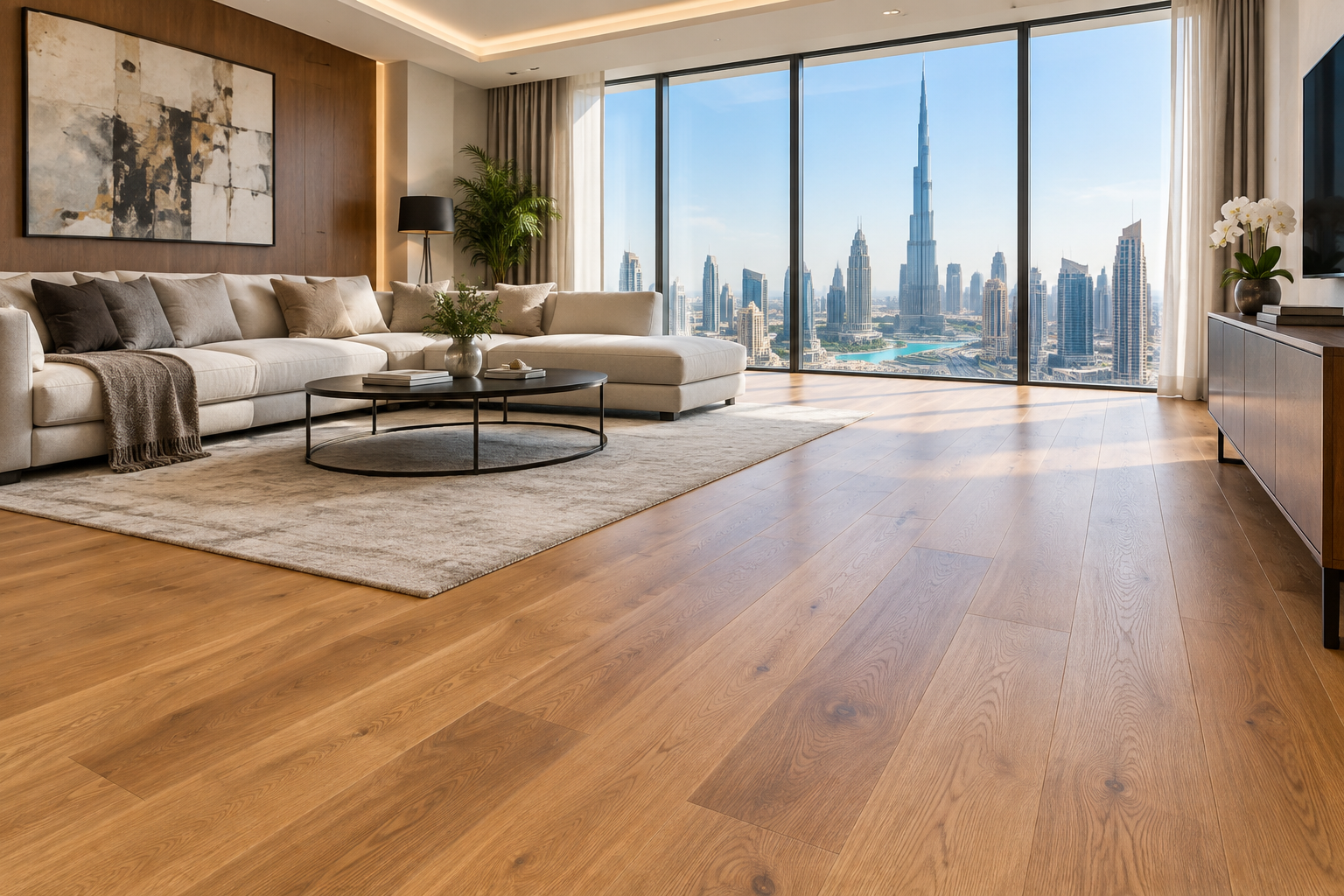
To step upon a seamless expanse of broadloom is to experience the floor as an architectural masterpiece in its own right. In the enduring dialogue of carpet tiles vs wall to wall carpet, the latter stands as the undisputed guardian of visual continuity. By eliminating the interruption of seams, broadloom creates a fluid transition between architectural elements, allowing the eye to travel across a room without friction. In the grand villas across the region, where the Majlis serves as a stage for hospitality and heritage, the weight and presence of wall to wall carpets are indispensable. This continuity creates an acoustic stillness, effectively absorbing the echoes of a bustling environment to foster a sanctuary of quietude. It's a foundation that doesn't just cover a floor; it anchors the room’s soul, providing a sense of gravitas that modular formats cannot easily emulate.
The Sensory Experience of Luxury Broadloom
The tactile 'give' of a high-quality hand-tufted roll provides a physical sensation of luxury that modular squares often struggle to replicate. There's a certain reverence in the way a deep pile yields underfoot, a result of the specialized underlays that only broadloom can truly master. The psychological effect of an unbroken pattern is equally profound. It expands the perception of room scale, transforming private quarters into vast, airy galleries where the architecture is allowed to breathe. This visual fluidity is complemented by superior thermal insulation, which helps maintain a consistent interior atmosphere against the heat of national climates. As suggested in the Consumer Reports flooring guide, the synergy between the fiber and the backing is what dictates this long-term sensory performance and lasting comfort.
Ideal Environments for Seamless Installation
Bedrooms and private lounges are the natural heirs to the broadloom tradition, benefiting from the 'cocoon' effect that only a singular textile can provide. In these intimate spaces, the floor acts as a soft embrace, muffling sound and inviting relaxation. This sense of prestige extends to executive boardrooms and hospitality suites, where the presence of a seamless carpet signals a commitment to excellence and historical integrity. Achieving this level of perfection requires artisanal care during installation. The tension must be exact, and the joins, where they must exist, should be handled with the precision of a master weaver. Zia and Sagor Carpets Trading LLC views this installation as the final bridge between the raw beauty of the textile and the finished aesthetic of your home, ensuring a result that transcends the ordinary. For those seeking a truly bespoke finish, a consultation with a seasoned specialist can reveal the path to an impeccable interior.
The Modular Masterpiece: The Precision and Versatility of Carpet Tiles
While the previous exploration of broadloom focused on the fluid grace of an unbroken horizon, we now turn our attention to the modular masterpiece. In the ongoing dialogue of carpet tiles vs wall to wall carpet, the tile represents a sophisticated evolution of the floor as a dynamic, functional canvas. Modern carpet tiles have achieved a level of engineering where the once-obvious seam has become nearly invisible; they mimic the immersive look of broadloom while retaining the calculated flexibility of a geometric puzzle. This logistical grace is particularly evident in the complex, multi-story architectures of our modern cities, where the movement of heavy, expansive rolls of textile is often impossible. Instead, these modular squares arrive with a quiet precision, ready to be assembled into a cohesive narrative.
There's an undeniable elegance in the concept of surgical maintenance. Rather than facing the anxiety of replacing an entire room's worth of textile due to a single, localized blemish, the connoisseur simply replaces a single modular square. This ability to mix textures and shades allows a designer to define zones and pathways without the need for physical barriers, creating a sense of order that feels both organic and intentional. It's a foundation that respects the passage of time, offering a resilient stage that can be refreshed with minimal disruption to the surrounding environment.
Defining Modern Workspaces and High-Traffic Halls
For the contemporary office narrative, modularity is the definitive choice. These tiles provide effortless access to sub-floor cabling and infrastructure, a necessity in an age where technology is woven into the very fabric of our working lives. In environments where the footprint of daily life is most heavy, such as national exhibition centers or bustling corporate headquarters, the durability of tiles ensures the aesthetic remains unblemished. They don't just cover the floor; they provide a high-performance surface that withstands the rigors of constant movement while maintaining a refined, professional atmosphere.
The Art of Pattern and Texture Play
Designers now utilize ombre or gradient layouts to guide the eye and the occupant through a space, using the floor as a subtle map of movement. By combining different pile heights and yarn densities, one can create a tactile landscape that adds depth and visual interest to an otherwise flat surface. This approach allows for a future-proof design that evolves alongside the room's purpose. Whether you're seeking a monolithic look that rivals the grandeur of broadloom or a vibrant, multi-textured mosaic, carpet tiles offer a versatile palette for those who view their environment as an ever-evolving work of art.
A Comparative Study: Navigating the Merits of Each Format
To truly appreciate the choice between carpet tiles vs wall to wall carpet, one must look beyond the surface and consider how these materials interact with the passage of time and the unique demands of our environment. The decision is a balance of art and utility. Broadloom offers a fluid grace, a silent horizon that feels permanent and deeply rooted in the heritage of fine interiors. In contrast, modular tiles provide a structured rhythm, a geometric precision that feels active and responsive to the needs of a modern inhabitant. While broadloom demands a commitment to the entire room, tiles offer a more calculated approach to longevity, where the footprint of daily life is managed with artisanal foresight.
The rituals of maintenance differ as significantly as the formats themselves. Broadloom requires a holistic approach to care, where professional attention preserves the integrity of the weave across its entire expanse. It's a relationship of stewardship. Conversely, the modular masterpiece allows for a more surgical ritual; should a single tile lose its luster, it is easily replaced without disturbing the surrounding narrative. This ensures the floor remains a pristine stage for years to come. Installation, too, is a study in contrasts. The broadloom roll, an expansive canvas of woven dreams, requires a dedicated master to stretch and secure its fibers, ensuring a tension that remains true for decades. Tiles, while simpler to transport, require a different kind of precision to ensure the patterns align with rhythmic perfection.
Performance in the National Context
In our unique climate, where humidity and temperature variations can challenge the stability of any material, the choice of foundation becomes even more critical. High-quality broadloom and modular tiles are both engineered to withstand these shifts, yet they do so in different ways. For spaces defined by expansive glass and abundant natural light, UV resistance is paramount to prevent the vibrant sapphire or deep emerald tones from fading into a memory. Both formats also serve as silent guardians of air quality, acting as filters that retain dust and allergens within their fibers until they are meticulously cleared, making them a sophisticated choice for those who prioritize a healthy, hypoallergenic sanctuary.
The Economics of Lasting Value
The initial investment in your floor is only one chapter of its story. When evaluating the long-term cost, one must consider the "waste factor" inherent in installation. Broadloom, due to the fixed width of its rolls, often results in a waste factor of 15% to 20% when tailored to complex room geometries. Modular tiles are significantly more efficient in this regard, fitting into corners and alcoves with minimal loss of material. However, the value of professional installation cannot be overstated for either format; it's the bridge that ensures your chosen textile performs as intended. To begin your journey toward an impeccable finish, we invite you to consult with the specialists at Zia and Sagor Carpets Trading LLC, where we treat every project as a unique architectural narrative.
Curating Your Selection: Choosing the Foundation for Your Narrative
To select a flooring foundation is to engage in a profound act of curation, where the choice between carpet tiles vs wall to wall carpet serves as the first brushstroke on an architectural canvas. One must first assess the room's soul; a space intended for quiet contemplation, such as a private library or a master suite, naturally leans toward the seamless, immersive horizon of broadloom. Conversely, a vibrant environment designed for collaboration and constant movement may find its ideal partner in the geometric precision of modular tiles. Architecture itself often dictates the path. Intricate nooks and complex geometries are often best served by the adaptability of tiles, while vast, grand expanses crave the uninterrupted weight of a woven roll.
A truly sophisticated project often embraces a hybrid approach, weaving a journey that utilizes both formats to define different zones within a single narrative. Imagine a sanctuary of broadloom in an executive suite that flows into a high-traffic corridor defined by the rhythmic versatility of tiles. This thoughtful integration of different carpet formats allows for a floor that is both a silent witness to private thought and a resilient stage for public life. It's a method of zoning that replaces cold barriers with a fluid, tactile transition.
The Z&S Consultation Process
Our curators act as a bridge between ancient craftsmanship and the demands of contemporary living, guiding you through a selection process that honors the history of each piece. We believe in the importance of seeing samples in situ, allowing the unique play of light in your space to reveal the true depth of color and texture in different pile types. During this contemplative engagement, we also address the underlay, the "hidden soul" of your floor, which provides the essential comfort and support that elevates a simple material into a cultural artifact. This ensures the sensory experience of your selection remains true to your vision for years to come.
From Selection to Installation
Our commitment to excellence extends from the first consultation to the final, meticulous fitting. We understand that a floor only becomes a masterpiece when it's installed with artisanal care, a philosophy that has established Z&S Carpets as a trusted national partner for residential luxury and exhibition carpet supply. Whether we're anchoring a private villa or a grand event hall, our goal is to provide a foundation that doesn't just cover a space, but fundamentally transforms it. By finalizing your design with a partner who understands the nuance of heritage, you ensure your floor remains a lasting testament to aesthetic excellence.
Anchoring Your Architectural Legacy
Selecting the ideal foundation is an exercise in both foresight and artistic expression. We've explored how the nuanced choice of carpet tiles vs wall to wall carpet dictates the very rhythm of your living or working space. Whether you're drawn to the immersive, seamless grandeur of broadloom for an intimate lounge or the modular, surgical precision of tiles for a vibrant office, your floor serves as the emotional core of your environment. It's a transformative element that anchors a room in meaning, history, and unparalleled beauty.
At Z&S Carpets, we've served as expert curators of global carpet traditions since 2010, bringing a deep understanding of heritage to every project. Our professional installation services bridge the gap between material quality and final aesthetic, ensuring your selection reflects a commitment to excellence that transcends fleeting trends. We invite you to begin your journey toward a curated floor with Z&S Carpets and discover a foundation that honors your unique architectural vision. Your space deserves a masterpiece that will endure for generations.
Frequently Asked Questions
Is wall to wall carpet more expensive than carpet tiles?
In the financial evaluation of carpet tiles vs wall to wall carpet, the initial material cost of broadloom is often lower, yet the total investment may increase due to specialized underlays and a waste factor of up to 20 percent. Modular tiles carry a higher per-meter price. However, they offer lasting value through surgical maintenance, allowing for the replacement of single units rather than the entire textile expanse.
Can carpet tiles look as luxurious as seamless broadloom?
While the debate of carpet tiles vs wall to wall carpet often centers on seams, modern engineering has birthed modular tiles with nearly invisible joins that mimic the immersive expanse of broadloom. These contemporary tiles utilize high-quality yarns and intricate textures to create a sophisticated foundation. They stand as a refined choice for executive boardrooms, offering a rhythmic aesthetic that rivals the grandeur of traditional rolls.
Which flooring option is better for soundproofing in a home office?
Wall to wall carpet is traditionally the master of acoustic stillness due to the depth of its pile and the inclusion of specialized underlays. This combination creates a sanctuary of quietude by absorbing echoes more effectively than the thinner, denser backing typically found in modular tile formats. It's the ideal selection for a home office where silence is the essential companion to deep contemplation and professional focus.
How do I clean a stain on carpet tiles compared to wall to wall carpet?
Cleaning a stain on carpet tiles is a matter of modular grace, as a localized blemish can be addressed by replacing the affected tile without disturbing the surrounding narrative. Broadloom requires a more holistic approach to care. Professional attention must treat the spot in situ to preserve the visual continuity of the singular surface, ensuring the floor remains a pristine stage for your daily life.
Can I install carpet tiles over an existing hard floor?
You can indeed install modular tiles over most existing hard surfaces, provided the sub-floor is level, dry, and free of debris. This versatility allows for a swift transformation of a space without the extensive preparation or removal processes often required for a traditional broadloom installation. It's an elegant solution for refreshing an environment with minimal disruption to the existing architectural elements of your home.
Which option is more sustainable for a large-scale commercial project?
Carpet tiles are frequently viewed as the more sustainable choice for expansive projects due to their significantly lower waste factor during the installation process. By fitting into complex nooks with precision, they reduce material excess. Their modular nature extends the floor's lifespan, as individual worn sections can be replaced without discarding the entire expanse, thus honoring a commitment to quality that transcends fleeting trends.
How long does it typically take to install wall to wall carpet in a villa?
The time required for a broadloom installation depends on the complexity of the architectural narrative, but a standard villa project typically spans two to four days. This duration accounts for the artisanal care required to stretch the textile, secure the underlay, and handle seams with the precision of a master weaver. It's a slow, deliberate process that ensures the final result anchors your home in beauty.
Can I mix different patterns of carpet tiles in the same room?
Mixing patterns is one of the greatest strengths of modularity, allowing you to define zones or guide movement through a space with ombre or gradient layouts. This creative flexibility transforms the floor into a dynamic work of art. By combining various textures and shades, you can reflect the evolving purpose of the room, creating a tailored landscape that evolves alongside your personal style.